How to Choose the Right Solar Vendor for Your Home or Business
Switching to solar energy is a smart investment for homeowners, businesses, industries, and commercial properties looking to reduce electricity costs and adopt clean energy. However, choosing the right solar vendor is just as important as choosing the right solar equipment.
A reliable solar vendor can help you select the right system, ensure professional installation, provide proper documentation, and support you with maintenance after installation. On the other hand, choosing a vendor only because of a low price can lead to poor-quality components, installation issues, and higher maintenance costs in the future.
1. Check the Vendor's Experience
Before selecting a solar company, check its experience in the solar industry. An experienced vendor is more likely to understand different site conditions, electricity requirements, installation challenges, and system configurations.
Ask about previous residential, commercial, or industrial solar projects completed by the vendor. A strong project portfolio can help you understand the vendor's capabilities and workmanship.
2. Look at the Quality of Solar Panels and Equipment
The quality of solar panels, inverters, mounting structures, cables, and other components directly affects the performance and life of your solar system.
Ask the vendor about the brands and specifications of the products being offered. A professional solar vendor should clearly explain the technology, efficiency, warranty, and expected performance of the equipment.
3. Choose a Vendor Offering the Right Solar Solution
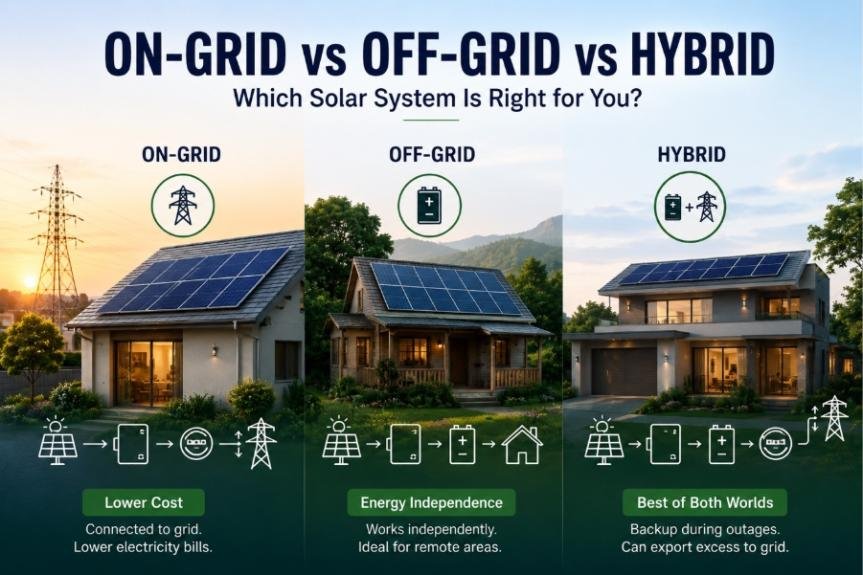
Every property has different energy requirements. Depending on your electricity consumption and site conditions, you may need an on-grid, off-grid, or hybrid solar system.
- On-Grid Solar: Suitable for properties connected to the electricity grid.
- Off-Grid Solar: Designed for locations requiring independent power generation with battery storage.
- Hybrid Solar: Combines solar generation, grid power, and battery backup for greater flexibility.
A good solar vendor should first understand your electricity usage and recommend a system based on your actual requirements rather than simply selling a standard package.
4. Compare Installation Standards
Solar panel installation requires proper planning and technical expertise. Factors such as roof condition, panel orientation, tilt angle, shading, structure strength, cable routing, earthing, and safety should be properly evaluated.
Professional installation helps improve system performance and reduces the possibility of future technical problems.
5. Understand Warranty and After-Sales Support
Solar systems are designed to operate for many years, so after-sales service is an important factor when selecting a vendor.
Before purchasing, understand the warranty terms for solar panels, inverters, batteries, structures, and other major components. Also ask whether the vendor provides maintenance, troubleshooting, inspection, and technical support after installation.
6. Don't Select a Vendor Based Only on Price
Price is an important consideration, but it should not be the only deciding factor. Two solar quotations may look similar while having significant differences in panel technology, inverter quality, structure design, protection systems, installation standards, and warranty coverage.
Instead of comparing only the final price, compare the complete solution and understand what is included in the quotation.
7. Ask for a Detailed Solar Proposal
A professional solar vendor should provide a clear proposal covering the major components and services included in the project.
Your quotation should ideally explain the proposed system capacity, solar panel specifications, inverter details, mounting structure, installation work, electrical protection equipment, monitoring system, warranty information, expected generation, and applicable services.
8. Check Customer Reviews and Previous Projects
Customer feedback and completed projects can provide valuable information about a solar vendor's reliability and service quality.
Look for genuine customer reviews and, where possible, visit completed installations or ask the vendor for project references. This can help you evaluate the quality of installation and customer support.
9. Consider Maintenance and Long-Term Performance
A solar installation is a long-term investment. Regular monitoring, cleaning, electrical inspections, and preventive maintenance can help maintain system performance.
Choose a vendor that can support you beyond the initial installation and provide assistance when maintenance or technical issues arise.
Conclusion
Selecting the right solar vendor is an important step toward getting the maximum value from your solar investment. Experience, product quality, installation expertise, warranty, after-sales service, transparency, and long-term support should all be considered before making a decision.
Whether you are planning a residential rooftop system, commercial solar installation, or industrial solar project, choose a vendor that focuses on quality, safety, performance, and customer satisfaction.
Ready to explore solar for your property? Connect with a trusted solar vendor to discuss your electricity requirements and find a suitable solar solution for your home or business.