On-Grid vs Off-Grid vs Hybrid Solar System: Which One Is Right for You?
Solar technology offers different solutions for homes, offices, shops, industries, farms, and commercial properties. The three most common configurations are on-grid, off-grid, and hybrid solar systems.
Although all three systems use solar energy, their design, battery requirements, backup capabilities, and connection to the electricity grid are different.
What is an On-Grid Solar System?
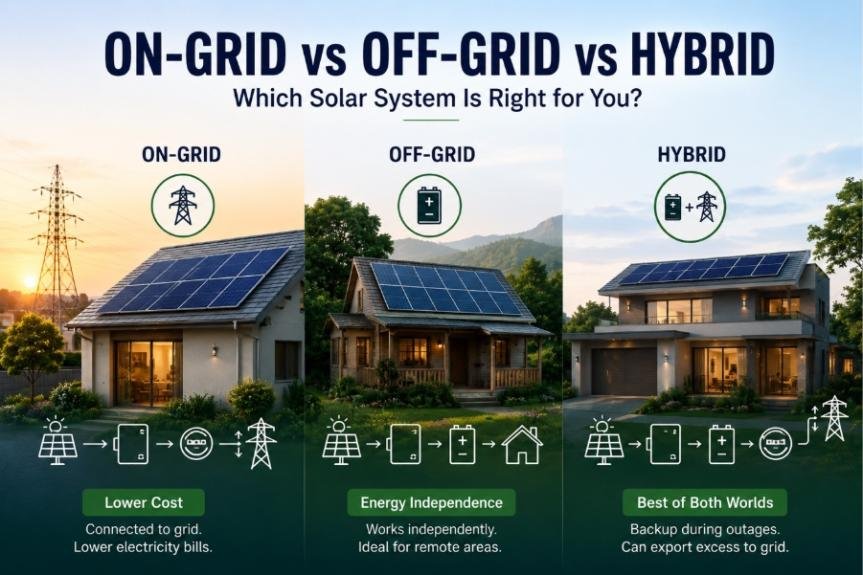
An on-grid solar system is connected to the local electricity grid. Solar panels generate electricity during the day, and the generated power can be used by the property. Depending on the applicable regulations and metering arrangement, surplus electricity may be exported to the grid.
On-grid systems are generally suitable for properties that have a reliable electricity-grid connection and primarily want to reduce their electricity bills.
Benefits of On-Grid Solar
- Can help reduce electricity bills
- No large battery bank is normally required
- Suitable for residential and commercial properties
- Efficient use of generated solar electricity
- Lower system complexity compared with battery-based systems
What is an Off-Grid Solar System?
An off-grid solar system operates independently from the electricity grid. Solar panels generate electricity and batteries store energy for use when solar generation is unavailable.
Off-grid systems can be useful for locations where grid electricity is unavailable, unreliable, or difficult to access.
Benefits of Off-Grid Solar
- Independent from the electricity grid
- Provides battery-based energy storage
- Suitable for remote locations
- Can provide power where grid connectivity is limited
What is a Hybrid Solar System?
A hybrid solar system combines solar generation with battery storage and grid connectivity. This configuration provides greater flexibility because solar energy, stored battery power, and grid electricity can be managed according to the system design and energy requirements.
Benefits of Hybrid Solar
- Solar generation with battery backup
- Can provide backup power during grid interruptions
- Better flexibility for managing energy consumption
- Suitable for properties requiring both savings and backup
On-Grid vs Off-Grid vs Hybrid Solar
| Feature | On-Grid | Off-Grid | Hybrid |
|---|---|---|---|
| Grid Connection | Yes | No | Yes |
| Battery Storage | Usually not required | Required | Usually included |
| Backup Power | Limited during grid outages | Yes | Yes |
| Best For | Bill reduction | Remote locations | Bill savings + backup |
Which Solar System Should You Choose?
The best solar configuration depends on your electricity usage, grid availability, backup requirements, roof area, budget, and long-term energy goals.
If your main objective is reducing electricity bills and you have a reliable grid connection, an on-grid system may be suitable. If you need independent electricity in a location without reliable grid access, an off-grid system may be a better option. If you want solar savings along with battery backup, a hybrid system can provide greater flexibility.
Consult a Solar Professional
Before purchasing a solar system, it is recommended to get a professional site assessment. A qualified solar vendor can evaluate your electricity consumption, roof space, backup requirements, and available infrastructure to recommend an appropriate system.
Conclusion
On-grid, off-grid, and hybrid solar systems each have their own advantages. Understanding the differences can help you make a better decision and choose a system that matches your energy requirements.
Whether you are planning solar for your home, office, shop, farm, or industrial facility, selecting the right system and working with an experienced solar vendor can help you achieve reliable and efficient solar power for years to come.